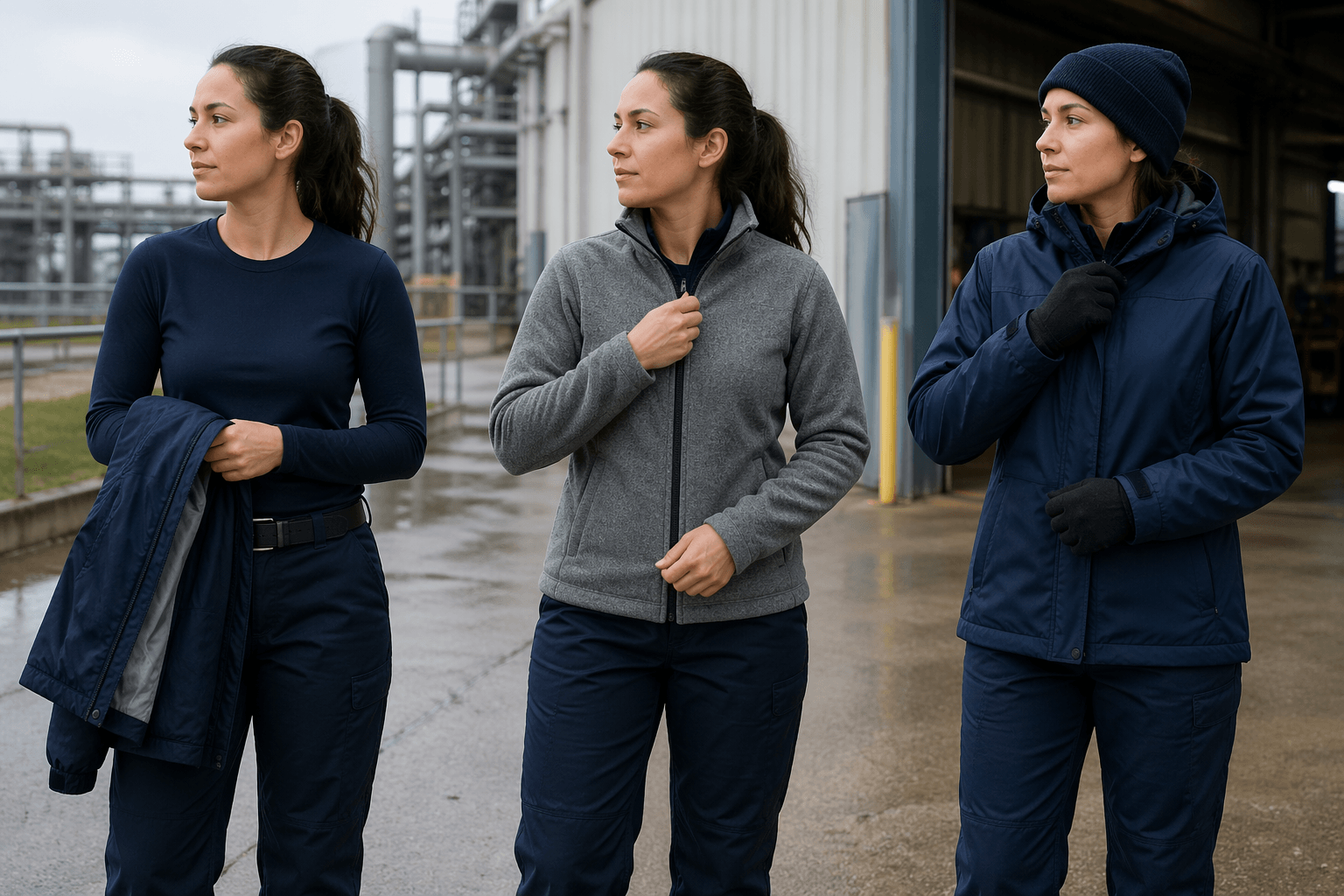
Australian weather is known for being unpredictable. You could be freezing during your shift in the morning, but by lunchtime, you could be sweating profusely. To survive in extreme conditions, it is essential that you have a smart approach to your workwear. A good clothing strategy is essential in helping you stay comfortable and protected from harsh weather conditions throughout your workday.
Why Workplace Layering Matters
Workplace layering is essential in helping you stay comfortable and safe at work. Wearing a single coat that is bulky in nature makes it difficult for you to move around. Moreover, if you work with heavy materials, it is not possible to do so with a bulky coat. Wearing multiple layers that are lighter in nature is an effective solution. This approach also makes it possible for you to avoid overheating.
When you work in cold conditions, you could be sweating. However, once you stop moving, you could be chilled to the bone. It is essential that you have control over your body heat. This is an essential safety feature that is part of being a good builder.
The Three-Layer System Explained
For you to develop an effective workwear system, it is essential that you understand the three-layer system. The first part of your workwear is your base layer. This is essentially what is in direct contact with your body. Your primary concern is that your base layer should be able to move your sweat away from your body.
The second part is your mid-layer. This is essentially what provides your body with heat. Your outer layer is what provides you with protection, such as men’s work vests. The three components of your workwear system give you the ability to create your own microclimate in an effortless manner.
The materials that make up your clothing system are what make it or break it. For your base layer, avoid cotton at all costs. Cotton holds sweat against your body and makes you cold and wet. For your mid-layer, fleece or lightly insulated vests provide the most warmth with the least weight. For your outer layer, materials such as canvas or hard shells should be used.
Managing Fluctuating Temperatures
A standard construction shift can have massive temperature fluctuations. With your layering system, you can respond to these temperature changes without skipping a beat. For your early morning shift, wear all three layers zipped up. As the sun comes up and your activity level increases, it’s easy to shed your outer layer.
See Also: What Is a DAO (Decentralized Autonomous Organization)?
In the middle of the day, it might be appropriate to wear just your moisture-wicking base layer. Don’t forget your mid layer in case of breaks when your body temperature drops quickly.
Adapting to Your Environment
The roles that make up your job site require different clothing adjustments. For instance, if you’re working with heavy equipment in an open cabin, the wind chill will be your enemy. You will need a strong outer layer that resists the wind. If your job requires intense manual labour in a sheltered area, your mid-layer might be all the insulation you need. Be sure to assess your job site activities for the day and dress according to your expected activities.
Gear Up for Unpredictable Days
Having your work wear setup under your control means you can be safe, comfortable, and productive despite whatever the weather may be. Take a closer look at your current setup and assess what is missing in your three-layer setup. Investing in good-quality moisture-wicking shirts and strong outerwear can completely revolutionise your entire work wear experience. Upgrade your clothing setup today and conquer your next shift with confidence!